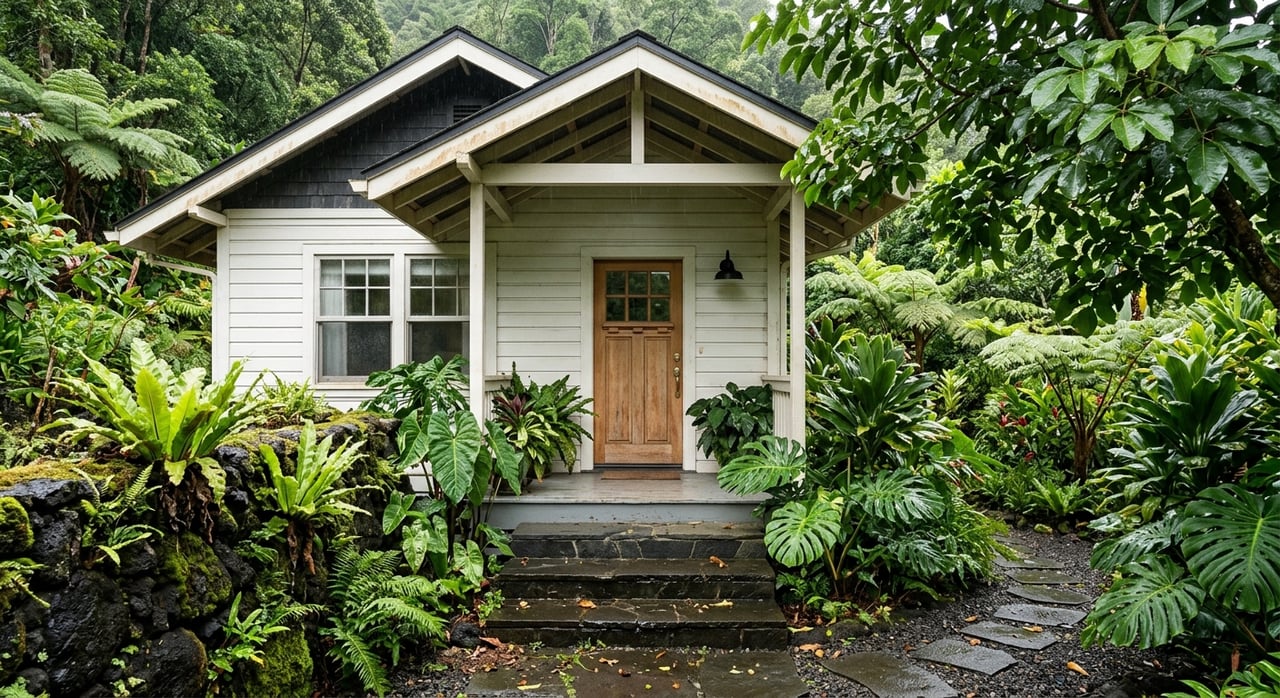
Living in Nuuanu Honolulu: Valley Homes and Daily Life
June 25, 2026
June 25, 2026
If you want Honolulu access without giving up a cooler, greener setting, Nuuanu deserves a close look. This valley area feels distinct from the city’s low-rise core, yet it stays closely tied to everyday town life. For buyers and sellers alike, understanding that balance helps you see why Nuuanu continues to stand out. Let’s dive in.
Nuuanu has an in-town valley identity, not a far-out suburban one. The official neighborhood planning boundaries place Nuuanu/Punchbowl from the Koʻolau crest and Puu Konahuanui ridge down toward Nuuanu Avenue and the H-1 edge, with Downtown-Chinatown beginning immediately on the makai side.
In practical terms, that means you are not choosing between nature and convenience in a simple way. You are living in a close-in Honolulu neighborhood that has a more mauka, tucked-away feel than many nearby areas.
Another part of Nuuanu’s character comes from climate. Hawaiʻi’s microclimates can change sharply over short distances, and Nuuanu Valley is noted as one of Oʻahu’s areas with plentiful rainfall. Compared with drier coastal areas, that helps create a setting that often feels cooler, greener, and more shaded.
Life in Nuuanu often feels shaped by contrast. You can be surrounded by mature trees, sloping streets, and a valley backdrop while still staying connected to central Honolulu for work, errands, and dining.
That close-in pattern shows up in transit too. TheBus Route 121 runs from Old Pali/Nuuanu to Alapai Transit Center through the corridor, and Route 4 serves Nuuanu and central Honolulu stops including Kuakini, Pauahi, Bethel, Hotel, Punchbowl, and Kapiolani/McCully.
If you drive, the area’s position near Nuuanu Avenue and the H-1 edge also supports a practical daily routine. If you use transit, the existing route pattern reinforces that Nuuanu functions as part of urban Honolulu, not apart from it.
One of the biggest misconceptions about Nuuanu is that it has one look. It does not. The area’s housing stock is historically layered, with a mix of home styles, lot types, and eras that give the neighborhood depth.
In some sections, you will find homes tied to older estate patterns and early 20th-century development. In others, the housing shifts as you move farther up the valley toward the Pali and lookout areas.
That variety is part of the appeal. If you are drawn to homes with architectural character, mature landscaping, and a sense of place, Nuuanu offers more texture than many more uniform neighborhoods.
Lower Nuuanu includes some of the area’s classic historic layers. The Burbank Tract on Wyllie Street is an intact subdivision developed from a larger estate, with homes dating mainly from 1924 to 1936 and primarily reflecting Craftsman-era forms.
That history still matters today because it shapes the streetscape. Instead of a one-note development pattern, you see a neighborhood that grew over time, with homes that often carry details tied to their original era.
For buyers, that can mean opportunities to find houses with a stronger design identity. For sellers, it means the story of the property and the block can play an important role in how a home is presented.
As you move farther up the valley, the setting changes. The terrain, elevation, and proximity to the Pali contribute to a stronger mauka feel, with more of the valley landscape becoming part of daily life.
This upper-area character connects to the broader impression many people have of Nuuanu as a cooler retreat from town. Queen Emma Summer Palace served as a summer retreat for Queen Emma, King Kamehameha IV, and Prince Albert, and the Nuʻuanu Pali lookout sits at 1,200 feet with notably strong winds.
Those landmarks are more than historic footnotes. They help explain why Nuuanu has long been associated with a climate and setting that feel different from the more built-up core below.
Nuuanu stands out for its range of older homes with local character. The area includes examples of Craftsman-era design, vernacular plantation-era architecture, Spanish Mission Revival, and estate-scale properties.
Specific historic properties show just how varied that mix can be. The George Robert Ewart House is a 1906 vernacular home associated with plantation-manager architecture. The Purvis Residence is a 1930 Spanish Mission Revival home on a sloping landscaped lot overlooking Nuuanu Stream.
The Clinton Briggs Ripley Homestead adds another layer, with a rare four-house compound that includes Italianate, Craftsman Bungalow, and Neoclassical buildings on a large, tree-shaded slope. At 60 Niniko Place, a former Nuuanu summer retreat later upgraded by C.W. Dickey is described as a Craftsman dwelling with broad eaves, lava-rock details, and board-and-batten interior elements.
You may not be shopping for a designated historic property, but these examples show the design language that gives Nuuanu much of its identity. Older homes here can offer visual warmth, site-specific design, and features that feel tied to the valley rather than interchangeable with any other part of town.
Part of living in Nuuanu is the land itself. Mature trees, sloping lots, and stream-adjacent settings all contribute to the neighborhood’s everyday texture.
That matters because the setting can shape the experience of the home as much as the square footage does. A house on a slope, a lot framed by large trees, or a property near the stream can feel more private, shaded, and connected to the valley environment.
It also means buyers should look at homes in person whenever possible. In a neighborhood where topography and vegetation are such a big part of the story, the feel of a property can change significantly from one street to the next.
Nuuanu offers cultural and outdoor anchors that support everyday life without pushing you far outside Honolulu’s urban orbit. That is a major part of the neighborhood’s appeal.
Queen Emma Summer Palace remains one of the area’s best-known landmarks. The state describes it as a historic landmark and museum preserved by the Daughters of Hawaiʻi, adding a strong sense of continuity and place to the valley.
For quick outdoor access, Nuʻuanu Pali State Wayside is open daily from 6 a.m. to 6 p.m. and offers windward views from the brink of the pali at 1,200 feet. The broader mauka recreation network also includes Nuʻuanu Trail on the Oʻahu trails list.
The city’s Primary Urban Center plan also notes that the state lookouts at Nuuanu Pali and Puʻu Ualakāʻa provide picnic areas, potable water, and public restrooms, with no overnight camping. For residents, that means nature access can fit into an ordinary weekend or even a short outing, not just a major day trip.
If you are considering Nuuanu, it helps to think beyond the usual checklist. This is a neighborhood where the feel of the valley, the age of the housing stock, and the setting of the lot can matter just as much as bed and bath count.
A few things to pay attention to include:
Because Nuuanu is not uniform, a home search here often benefits from a more tailored approach. Small location differences can create a very different living experience.
If you own a home in Nuuanu, your property may offer qualities that deserve more than a standard listing description. Buyers are often responding to the full setting, not just the floor plan.
That can include architectural details, mature landscaping, classic lot patterns, and the valley’s cooler, greener identity. It can also include the home’s relationship to lower Nuuanu, upper-valley surroundings, or transit access into town.
For homes with distinctive design or setting, presentation matters. Thoughtful staging, professional photography, and clear storytelling can help buyers understand what makes a Nuuanu property special from the first showing onward.
Whether you are buying or preparing to sell, Nuuanu rewards a nuanced read. It is one of those Honolulu areas where history, landscape, and daily convenience all work together to create a lifestyle that feels both grounded and distinctive.
If you are exploring a move in Nuuanu or thinking about how to position your home in today’s market, Hawaii LUX Team of eXp Realty can help you navigate the details with local insight and a polished, full-service approach.
October 22, 2026
October 15, 2026
October 8, 2026
October 1, 2026
September 24, 2026
September 17, 2026
September 10, 2026
September 3, 2026
August 27, 2026
Get assistance in determining current property value, crafting a competitive offer, writing and negotiating a contract, and much more. Contact us today.