Does your Manoa home stay damp long after the rain stops? In this shaded valley, frequent showers and high humidity can linger, which is tough on roofs, siding, decks, and indoor air. You want a home that looks great and holds up without constant repairs. In this guide, you’ll learn the best materials and details for Manoa’s rainy microclimate, what to inspect before you buy, and how to maintain durability over time. Let’s dive in.
Why Manoa’s climate matters
Manoa sits in a wet, shaded valley where rainfall is frequent and drying is slow. That means more wet–dry cycles, higher relative humidity, and organic debris on surfaces. These conditions increase the risk of mold and algae, wood rot, peeling paint, and corrosion.
Materials that tolerate repeated wetting and resist biological growth perform better here. Equally important are details that keep water out, let assemblies drain, and allow air to circulate so things can dry.
Best roofing for Manoa
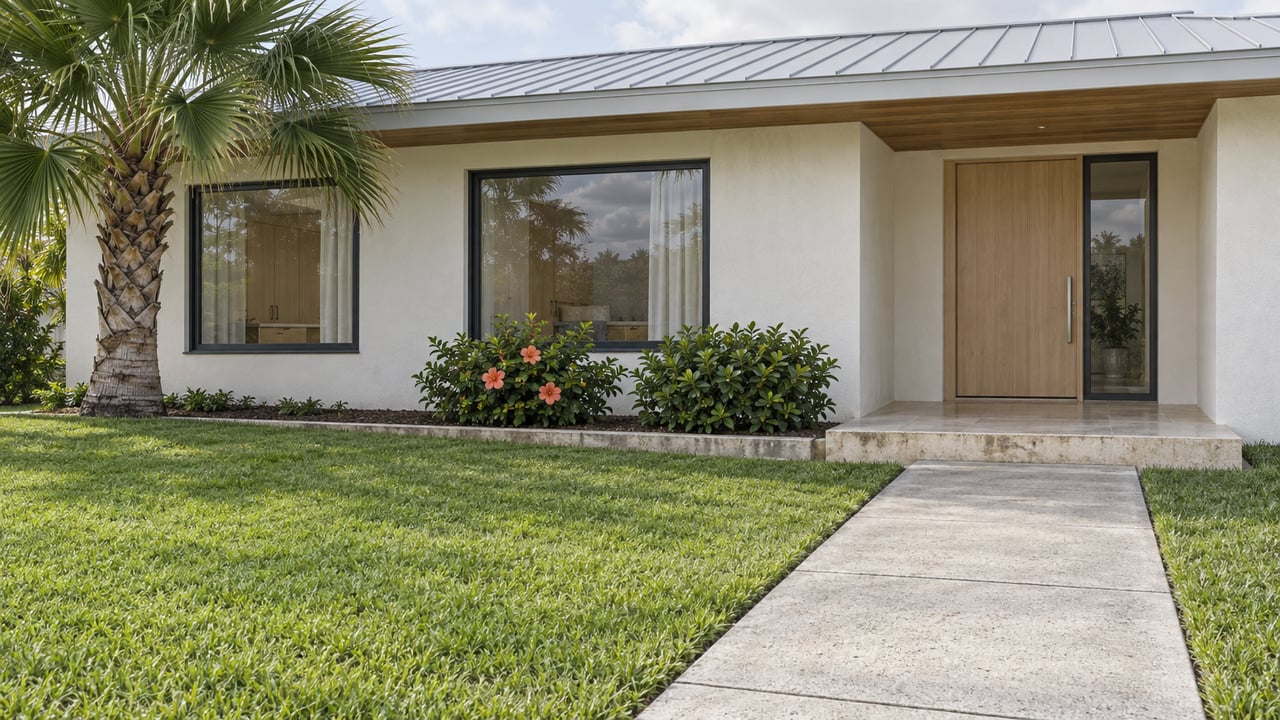
Choose roof systems that shed water fast and resist growth.
- Metal roofing in aluminum or coated steel is highly durable and sheds water quickly. Use corrosion‑resistant fasteners and drip edges.
- Concrete or clay tile lasts a long time and resists rot. Plan for periodic cleaning and sealing to limit moss and algae in shaded areas.
- High‑quality laminated asphalt shingles with algae inhibitors work when paired with proper underlayment, ventilation, and precise flashing.
For all roofs, use a continuous water‑resistive underlayment and add self‑adhesive membranes in valleys, at eaves, and around penetrations. Make sure roof‑to‑wall flashings are well detailed and easy to inspect. Stainless fasteners and proper sealant at penetrations help prevent premature failure.
Smart siding and paint
Moisture‑tolerant cladding and breathable, mildew‑resistant coatings are key.
- Fiber cement siding resists rot and insects. Install it over a rainscreen to create a drainage and ventilation gap behind the boards.
- Engineered or rot‑resistant woods can work when protected by roof overhangs and proper clearances from grade. Plan on regular finishing.
- Masonry or stucco can be durable if you include drainage and weep paths with control joints to avoid trapping moisture.
For finishes, use high‑quality exterior acrylic or elastomeric paints with mildew inhibitors. In shaded areas, choose coatings labeled algae‑resistant. Where materials absorb moisture, pick coatings that allow vapor to pass so moisture does not get trapped.
Flashings and fasteners
In a humid, rainy setting, metals and connections must resist corrosion.
- Use stainless steel flashings and hardware where possible. In more corrosive spots, 316 stainless provides added protection.
- Ensure continuous head flashings, sill pans, and drip edges at windows and doors. Include proper flashing at deck ledgers and eaves.
- Choose stainless fasteners for exterior wood and decks. Hot‑dip galvanized may be acceptable in less exposed areas but will degrade faster in tropical humidity.
Decks and exterior stairs
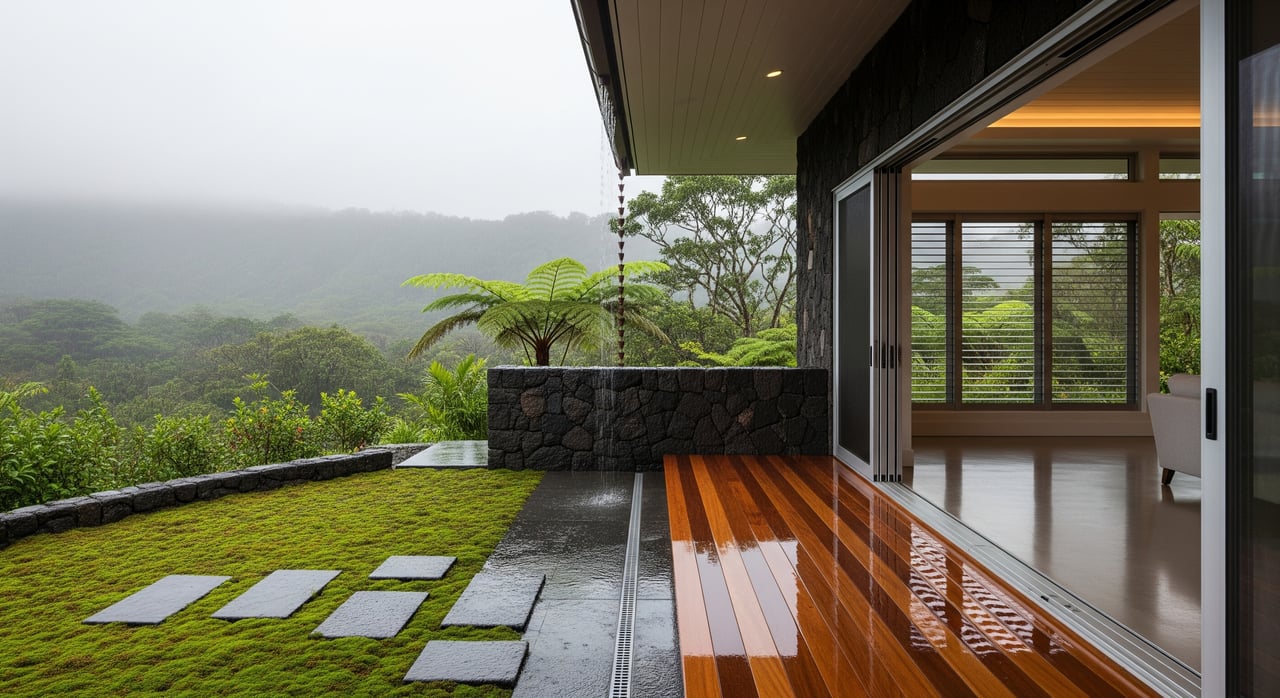
Decks see persistent moisture and organic debris in Manoa’s shade.
- Tropical hardwoods like ipe offer natural rot resistance but need stainless fasteners and predrilling.
- Modified or thermally treated woods provide better stability and decay resistance than untreated softwoods.
- Capped composite decking resists rot and growth on the surface, but it needs good under‑deck drainage and ventilation to avoid trapped moisture.
Design for rapid drying. Keep joists above grade, slope horizontal surfaces, and avoid ledges that collect leaves and moss. Hidden fastener systems rated for wet climates help performance and appearance.
Windows and doors
Frames, sills, and thresholds are frequent leak points in heavy rain.
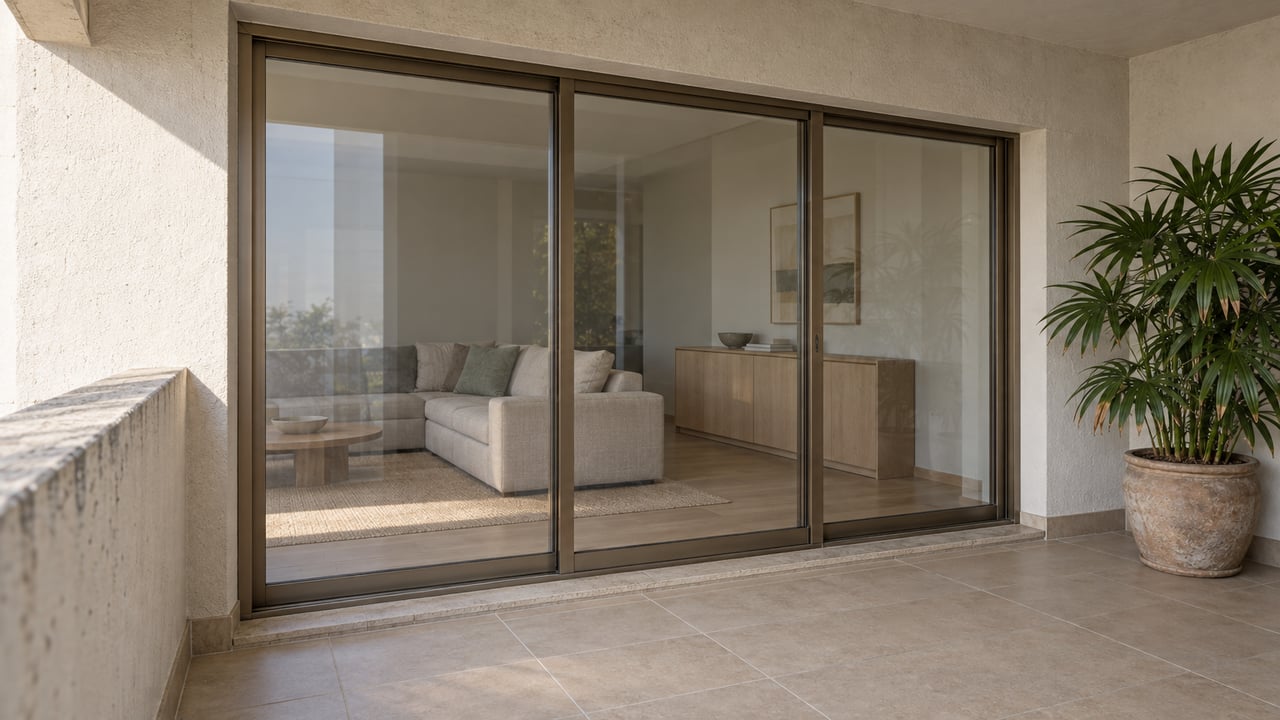
- Aluminum‑clad, fiberglass, and vinyl frames handle humidity well. Wood frames can work if they are well sealed and maintained.
- Include sloped sills, sill pans, drip caps, and proper flashing at all openings to move water away from the wall.
- Use insulated glazing with quality seals. If you see condensation on glass, address indoor humidity and ventilation instead of only upgrading the window.
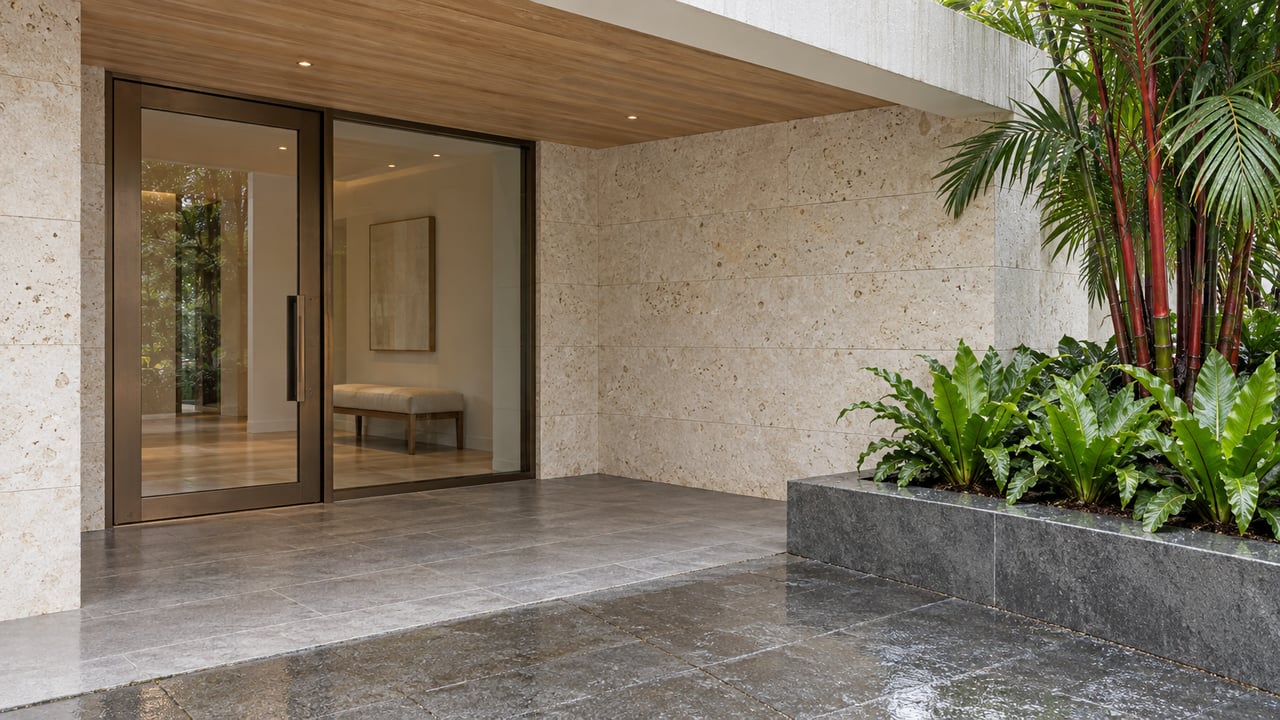
Exterior doors benefit from raised or well‑flashed thresholds and roof overhangs for added protection.
Gutters and drainage
Manage rainwater volume and keep it away from the structure.
- Oversize gutters and downspouts for your roof area. Reduce splash onto siding and walkways.
- Extend downspouts to discharge water several feet away from the foundation as site layout allows.
- Clean gutters and roof valleys often, especially with nearby trees. Debris clogs are a common cause of overflow and siding damage.
Select aluminum, copper, or stainless components for better corrosion resistance.
Ventilation and humidity control
Rain and shade make drying slower. Ventilation and dehumidification keep moisture in check.
- In attics, use balanced soffit intake with ridge or roof exhaust vents. Install baffles so insulation does not block soffit airflow.
- Seal the ceiling air barrier and insulate properly to limit warm, moist indoor air from entering the attic.
- For crawlspaces or under‑floor areas, consider a sealed approach with a soil vapor barrier, wall insulation, and controlled conditioning or dehumidification. Vent‑only crawlspaces often bring in humid air and can struggle in this climate.
Aim to keep indoor relative humidity below 60 percent, ideally 30 to 50 percent. Mechanical ventilation and dehumidifiers help when outdoor air is humid. Do not rely on open windows alone.
Buyer and owner inspections
Focus your walkthrough on the places where moisture hides and causes damage.
- Roof and flashings: look for cracked shingles, moss in valleys, missing or corroded flashings, and any ceiling stains inside.
- Eaves and attic: check for staining, soft wood, blocked soffit vents, or mold. Verify baffles keep insulation clear of vents.
- Gutters and downspouts: note sagging sections, overflow stains, and downspouts that end near the foundation.
- Siding and trim: watch for peeling or blistered paint, green or black staining, soft spots, and gaps at joints.
- Decks and undersides: inspect the ledger connection and flashing, look for trapped debris, and confirm airflow under boards.
- Windows and doors: look for water stains under sills, soft jambs, and failing sealant.
- Crawlspace and foundation: look for damp soil, pooling water, mold, or efflorescence on concrete. Check grading and drainage.
- Fasteners and metals: spot rusted nails or screws and discolored areas around joints.
- Indoor humidity: note musty odors, condensation on windows, or visible mold, which signals a need for ventilation and dehumidification.
Address active leaks, structural rot, failing roof‑to‑wall flashings, compromised deck ledgers, or chronic indoor mold immediately for safety and durability.
Maintenance schedule
A consistent plan keeps small issues from becoming big repairs.
- Gutters and valleys: inspect and clean at least twice per year and after big storms. Increase frequency if you have heavy tree cover.
- Exterior paint and stain: inspect yearly. Plan to repaint or touch up every 5 to 7 years, depending on exposure and product.
- Decks: inspect annually. Clean and re‑seal wood yearly. Clean composite boards and check the underside for airflow and debris.
- Roof: do a visual check annually and schedule a professional inspection every 3 to 5 years or after major storms.
- HVAC and dehumidifiers: service twice a year. Keep condensate drains and drip pans clean.
Cost vs durability
In Manoa’s wet microclimate, spending a bit more upfront often lowers lifetime costs.
- Higher durability picks like metal roofing, fiber cement siding, stainless fasteners, and tropical hardwoods reduce failures from rot and corrosion.
- Lower initial cost choices, like untreated softwood or minimal flashing, can lead to expensive repairs within a decade in a shaded, humid setting.
Choose materials and details that prevent water entry, promote drainage, and allow drying. That is where the return shows up.
Local codes and pros
Work with contractors who have experience in Oahu’s valley and windward neighborhoods and who specify corrosion‑resistant materials. Confirm permit needs with the County of Honolulu for roofing, structural changes, and major exterior work before starting. Ask for references for similar projects in shaded, high‑rainfall areas and confirm they install rainscreens, sill pans, and stainless hardware as standard practice.
Next steps
If you are buying or preparing to sell in Manoa, the right material choices and a targeted inspection plan can protect value and reduce surprises. We are happy to help you review a property’s roof, siding, drainage, and ventilation priorities so you can move forward with confidence. Reach out to the Hawaii LUX Team of eXp Realty for guidance or to get your Free Home Valuation.
FAQs
What roofing works best in Manoa’s rainy climate?
- Metal roofing, concrete or clay tile, and high‑quality asphalt shingles with algae inhibitors perform well when paired with proper underlayment, ventilation, and detailed flashings.
How can I prevent indoor mold in a Manoa home?
- Keep indoor humidity below 60 percent with mechanical ventilation and dehumidifiers, seal air leaks, ventilate attics correctly, and fix any leaks or drainage issues promptly.
Do I really need oversized gutters in Manoa?
- Yes, high rainfall makes oversized gutters and downspouts a smart choice, along with frequent cleaning and downspout extensions that move water well away from the foundation.
Which decking materials hold up in shaded yards?
- Tropical hardwoods, modified wood, and capped composites perform best when installed with stainless fasteners, good under‑deck ventilation, and clear drainage paths.
What should buyers inspect first in a Manoa home?
- Start with roof flashings and valleys, gutters and downspouts, siding and paint at joints, deck ledger flashing, window sills, and any crawlspace for signs of moisture or mold.