Kakaako Condo Buying Guide: Layouts, Amenities, and Fees
May 14, 2026
May 14, 2026
Looking at condos in Kaka‘ako can feel exciting and overwhelming at the same time. One building may offer compact, efficient studios with practical amenities, while another may lean heavily into resort-style features and much higher monthly costs. If you want to buy with confidence, you need to look past the listing photos and compare how the layout, amenities, parking, and fees actually fit your life and budget. Let’s dive in.
Kaka‘ako is a 600-acre district overseen by the Hawaii Community Development Authority, or HCDA. The area is planned as a pedestrian-oriented urban neighborhood with housing, parks, open space, and public benefits. That broader planning vision helps explain why the neighborhood feels distinct from many other condo areas on O‘ahu.
A big reason is the built form. HCDA planning materials show towers set back from the street and raised on parking podiums, with parking built into those podium structures rather than in new surface lots. In practical terms, that often creates a more vertical, amenity-focused condo experience than you may find in older low-rise stock elsewhere in Honolulu.
Within Kaka‘ako, Ward Village is one of the clearest examples of newer condo product. It is a 60-acre master-planned community between Downtown Honolulu and Waikīkī, with walkable pathways, bike lanes, and tree-lined sidewalks. If you are comparing newer towers, this part of Kaka‘ako often sets the tone for what buyers expect from modern urban condo living.
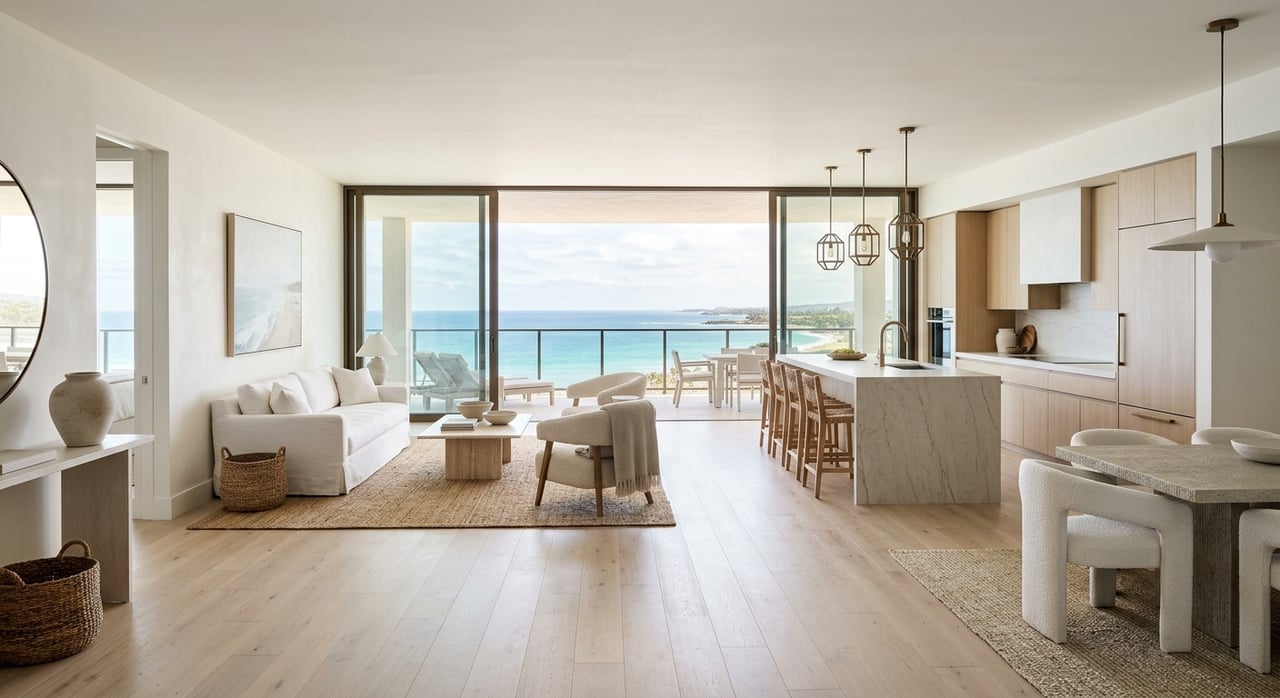
When you buy a Kaka‘ako condo, the floor plan matters as much as the square footage. Newer towers range from compact studios to three-bedroom homes and penthouses, so two units with similar square footage can live very differently. That is why it helps to compare layout efficiency instead of relying on photos alone.
As you review options, focus on a few details that affect daily life:
The Park Ward Village offers a useful example of the range you may see. Its published floor plans show studios around 389 to 454 square feet, one-bedrooms around 563 to 792 square feet, two-bedrooms around 921 to 1,168 square feet, and three-bedrooms up to about 1,555 square feet. The project also separates tower and podium residences, which is a reminder that even within one building, the layout style can vary.
The finishes and livability details matter too. The Park’s published features call out open kitchen-living-dining areas, residence-specific air conditioning, oak flooring, and Juliet balconies. Those details may sound simple, but they can shape how spacious and functional a home feels once you move in.
If you are deciding between a studio or one-bedroom, efficiency becomes the key question. A well-designed smaller unit can feel comfortable if the kitchen is compact, the living area is open, and storage is handled well. A poorly designed larger unit can still feel awkward if too much square footage is lost in hallways or tight corners.
At the other end of the market, larger two-bedroom and three-bedroom layouts often bring more flexibility for guests, work-from-home needs, or longer-term living. They may also come with different parking, storage, and fee structures, so the monthly ownership picture can shift quickly as unit size increases.
Kaka‘ako includes several very different condo categories. Ae‘o includes studios, one-, two-, and three-bedroom plans plus penthouses, while Waiea represents a more customized luxury profile with a stronger service and design emphasis. Ulana Ward Village adds another layer to the market, with studios through three-bedrooms in a project described by Ward Village as providing roughly 697 homes at below-market prices for kama‘āina.
That variety is important because the same neighborhood can produce very different buying decisions. One buyer may want a compact unit in a newer tower with practical shared spaces. Another may be looking for a larger, more service-oriented residence with a much broader amenity package.
In Kaka‘ako, amenities are not just a bonus. They are one of the main ways buildings differentiate themselves. That means you should ask whether the amenity package adds real value for your lifestyle or simply adds cost.
For example, Ae‘o includes a 25-meter fitness pool, lounges, private cabanas, dining areas, a family activity area, gym, spa, private movie theater, and karaoke lounge. Waiea takes that much further with a yoga studio, steam and sauna rooms, treatment rooms, an infinity pool, resort cabanas, an indoor golf simulator, cinema, guest suites, dog park, library, and sunset bar.
The Park Ward Village has a notably broad Level 8 amenity deck. Published materials list clubrooms, BBQ cabanas, lawns, a children’s play area, fitness pods, pickleball and tennis courts, lap and resort pools, a spa, walking path, fitness center, locker rooms, guest suites, and a dog walk and park. By contrast, Ulana’s amenities are more practical and community-oriented, including private indoor-outdoor rooms, BBQ areas, co-working spaces, surfboard racks, a dog park, and adjacency to Ka La‘i o Kukuluāe‘o Park.
A long amenity list does not automatically mean a better fit. If you love entertaining, guest suites, cabanas, clubrooms, and dining spaces may be meaningful. If you work remotely, co-working space or quieter shared areas may matter more than resort-style extras.
Try to think in terms of value, not just luxury. A building with fewer but more relevant amenities may be a smarter buy for you than one with an impressive list you rarely use. That question becomes even more important once you compare monthly maintenance fees.
In Kaka‘ako, parking is a major practical detail, not a minor footnote. District planning and newer tower concepts reinforce the podium-parking model, and Ward Village says its parking network includes more than 2,600 stalls along with EV charging, Biki bike stations, and short-term parking. That speaks to how central parking and mobility are to everyday ownership here.
Still, buyers should remember that parking is unit-specific, not just building-specific. Public listing examples in the research show that some Ulana and Ae‘o units include one assigned stall, while larger or higher-end units may include two stalls. Some larger-unit examples in other Kaka‘ako buildings show side-by-side stalls, while others may offer tandem parking.
Before you move forward on any condo, get clear answers on:
These details affect daily convenience more than many buyers expect. A beautiful unit can feel less practical if parking is difficult, guest parking is limited, or storage for beach and outdoor gear is not well planned.
Maintenance fees are one of the most important parts of buying a Kaka‘ako condo. In Hawaii, the Department of Commerce and Consumer Affairs explains that maintenance fees can cover common and limited common area maintenance, management, insurance, utilities, and reserve contributions. The board sets the fee, adopts an annual budget, and is expected to fund reserves adequately over time.
That reserve piece matters. If reserves are inadequate, owners can face special assessments. Hawaii condo rules also require written notice of maintenance fee increases at least 30 days before the increase takes effect, and Act 62 requires the developer public report to include a breakdown of annual maintenance fees, including reserve contributions based on a reserve study.
In other words, the monthly fee is not just a number to glance at. It is part of the building’s financial story.
Recent public listing examples in the research show a wide fee range across Kaka‘ako. In a small sample, one Ulana one-bedroom was around $476 per month, The Park was around $490, Ae‘o examples ranged from about $499 to $1,183 depending on the unit and fee structure, Kōʻula examples ran roughly $741 to $1,042, and Waiea ranged from about $1,751 on a two-bedroom to $5,373 on a penthouse. Some listings also itemized reserve contributions separately from the base maintenance fee.
That range tells you something important. You are not just comparing homes. You are comparing different ownership models, amenity levels, service expectations, and reserve structures within the same neighborhood.
If you want to compare Kaka‘ako condos clearly, use a framework that goes beyond purchase price. Price matters, of course, but your monthly carrying cost and day-to-day usability may matter just as much.
Here is a practical way to compare options:
| Factor | What to Review |
|---|---|
| Layout | Efficiency, room flow, corner vs. interior stack, usable lanai space |
| Monthly cost | Maintenance fee, reserve contribution, utility inclusions, parking costs if any |
| Amenities | Which features you will actually use and how extensive the package is |
| Parking | Number of stalls, tandem vs. side-by-side, EV access, guest parking |
| Storage | In-unit storage, extra storage, bike or surfboard space |
| Building finances | Current budget, reserve study, any special assessments |
| Restrictions | Whether the unit is subject to reserved-housing or resale rules |
This is especially important in Kaka‘ako because the neighborhood includes reserved-housing projects, mid-range newer towers, and ultra-luxury buildings. The same location can produce very different monthly ownership profiles.
Some Kaka‘ako projects are governed by HCDA’s Reserved Housing Program. HCDA states that the program serves Hawaii residents earning 80 to 140 percent of area median income, requires at least 20 percent of new residential units to be set aside, and can include owner-occupancy and shared-equity resale restrictions. HCDA lists A‘ali‘i, Ke Kilohana, and Ulana among projects governed by reserved-housing rules.
If you are considering one of these units, make sure you understand exactly what rules apply. Restrictions can affect occupancy, resale, and long-term planning. That does not make these homes less valuable, but it does mean your due diligence should be especially specific.
Once you narrow down a Kaka‘ako condo, ask for the documents and details that show the real ownership picture. This step can help you avoid surprises after closing.
Request the following:
These items can vary from building to building. Even in newer towers, utilities may be bundled differently, parking setups may differ, and reserve contributions may appear in different ways on statements or listings.
Kaka‘ako often sits above the broader O‘ahu condo market, especially at the luxury end. For context, O‘ahu’s condo median sale price was $500,000 in April 2026, with a 38-day median market time and 2,353 active listings. In March 2026, nearly half of condo sales were in the $300,000 to $599,999 range.
That does not mean Kaka‘ako is out of reach. It does mean you should compare not just the asking price, but the full monthly ownership profile against other urban Honolulu options. A condo that looks competitive on price may carry a very different monthly cost once fees, reserves, and parking are factored in.
If you want help sorting through Kaka‘ako towers, comparing carrying costs, or narrowing your search to the right fit for your lifestyle, the team at Hawaii LUX Team of eXp Realty is here to guide you with clear, local insight.
October 22, 2026
October 15, 2026
October 8, 2026
October 1, 2026
September 24, 2026
September 17, 2026
September 10, 2026
September 3, 2026
August 27, 2026
Get assistance in determining current property value, crafting a competitive offer, writing and negotiating a contract, and much more. Contact us today.